







If you have a stuck print job in the print queue, you have already restart print spooler but you are not able to print. You can clear and reset the print spooler to remove the stuck print job. This post will show you how to reset and clear the print spooler to remove print jobs in Windows .
The most important part of the print interface is the print spooler. A print spooler is an executable file that manages the print job. Print Management involves locating the appropriate printer driver, loading that driver, spooling high-level function calls to the print job, scheduling the print job for printing, and more.
How Bonus Codes Actually Work in Online Casinos, Explained by Casizoid
Bonus codes have been a fixture of online casino marketing since the mid-2000s, when operators first began competing aggressively for player registrations in a rapidly expanding digital gambling market. Despite their ubiquity, the mechanics behind how these codes actually function — technically, commercially, and from a regulatory standpoint — are rarely explained in any depth. Most players enter a string of characters into a form field without understanding what happens next, why certain codes expire, or why the same code can produce different outcomes depending on the platform. Casizoid has spent considerable time analyzing how these systems are built and what players should realistically expect from them.
The Technical Infrastructure Behind a Bonus Code
At its core, a bonus code is a database lookup key. When a player submits a code during registration or within a deposit flow, the casino’s backend system queries a promotional database to retrieve the associated rule set. That rule set typically contains a cluster of parameters: the bonus type (deposit match, free spins, cashback), the percentage or flat value, the minimum qualifying deposit, the wagering requirement multiplier, the eligible game categories, the expiration timestamp, and sometimes geographic or currency restrictions.
What makes this more complex than it appears is that modern casino platforms often run multiple promotional engines simultaneously. A code entered during sign-up might trigger a welcome bonus module, while the same platform uses a separate engine for reload offers and a third system for VIP-tier rewards. These systems don’t always communicate cleanly with one another, which is why players occasionally report that a code was “accepted” but the bonus never appeared in their account — the code validated against one system but failed to propagate to the bonus wallet module.
From a software architecture perspective, most large operators use either proprietary in-house platforms or white-label solutions from providers like Softswiss, EveryMatrix, or Playtech’s IMS. Each of these handles promotional logic differently. Softswiss, for instance, uses a modular bonus engine that allows operators to chain conditions — meaning a single code can unlock a sequence of bonuses across multiple deposits rather than a one-time reward. This architecture became increasingly common after 2018, when regulators in several European jurisdictions began requiring clearer disclosure of multi-stage promotional structures.
How Wagering Requirements Are Calculated and Why They Vary
The wagering requirement attached to a bonus code is the figure that determines how much real-money betting must occur before bonus funds convert to withdrawable cash. A 30x wagering requirement on a €100 bonus means €3,000 in qualifying bets must be placed. This number is not arbitrary — it is derived from the operator’s expected house edge across the game categories permitted under the bonus terms.
Casizoid’s analysis of promotional terms across dozens of platforms reveals a consistent pattern: operators set wagering requirements by calculating the inverse of their average return-to-player (RTP) rate on eligible games, then applying a margin that ensures the expected cost of the bonus remains within a defined percentage of the bonus value. For a game category with an average RTP of 96%, the house edge is 4%. To recover a €100 bonus with 95% probability, an operator needs approximately 25x wagering at minimum. The industry standard of 30x–40x reflects the additional buffer operators build in to account for variance and player behavior.
Game contribution rates exist for the same reason. Slots typically contribute 100% toward wagering because their house edge is relatively stable and predictable. Blackjack and video poker, which can be played close to theoretical RTP with basic strategy, often contribute 10% or less — sometimes zero. Live dealer games occupy a middle ground, frequently contributing 10%–20% depending on the operator. When a bonus code is redeemed, the system automatically applies these contribution weightings to every bet placed during the active bonus period.
Geographic variation in wagering requirements reflects regulatory pressure more than operator generosity. In the United Kingdom, the Gambling Commission’s 2019 guidance on unfair terms led many operators to reduce wagering requirements to the 20x–35x range and to improve the clarity of game contribution disclosures. In markets with lighter regulatory oversight, 50x–60x requirements remain common. Players using a bonus code on a platform licensed in Malta, Gibraltar, or Curaçao will encounter meaningfully different terms than those on a UK-licensed site, even when the promotional marketing looks identical.
Where and When Codes Are Entered — Platform-Specific Differences
The point at which a bonus code must be entered varies significantly between platforms, and entering it at the wrong stage is one of the most common reasons players lose access to a promotion. Some operators require the code during the registration process itself, embedded in a dedicated field on the sign-up form. Others require it at the cashier stage, entered alongside the deposit amount before the transaction is confirmed. A third model — less common but used by several crypto-native platforms — requires the code to be activated from within the account dashboard after a deposit has already been processed.
Stake Casino, for example, uses a system where bonus codes are entered through the promotions or account settings section rather than during the deposit flow itself. For players unfamiliar with the platform’s layout, this creates genuine confusion. Resources that explain gdzie wpisać kod bonusowy w Stake Casino address exactly this kind of navigation ambiguity — the question of where within a specific platform’s interface the code field actually lives, which is distinct from understanding the general mechanics of how codes function.
Timing matters as much as placement. Many codes are tied to a player’s first deposit specifically, meaning the system checks whether any prior deposits exist in the account before applying the bonus. If a player deposits once without a code, then attempts to use a welcome code on a second deposit, the system will typically reject it — not because the code is invalid, but because the eligibility condition has already been voided. This is a backend validation step that operates independently of whether the code itself is still active in the promotional database.
Mobile versus desktop entry can also produce different outcomes on platforms that haven’t fully synchronized their promotional modules across interfaces. Several operators running hybrid native-app and browser-based products have documented cases where a code entered via the mobile app failed to register because the app was running an older version of the promotional engine. These are edge cases, but they illustrate that bonus code redemption is not a simple form submission — it involves multiple layers of system validation that can fail independently of one another.
The Regulatory and Commercial Logic Behind Code Distribution
Bonus codes serve a dual function for operators: they are both a marketing tool and a tracking mechanism. When an operator distributes unique codes through different affiliate channels, each code acts as a conversion tag. The casino can attribute a registration or deposit to a specific affiliate partner, influencer campaign, or advertising placement without relying on third-party cookies or pixel tracking, both of which have become increasingly unreliable under GDPR and evolving browser privacy standards. This is why two players can receive functionally identical welcome bonuses via different codes — the bonus parameters are the same, but the codes exist to separate the traffic sources in the operator’s analytics.
From a compliance standpoint, regulators in several jurisdictions have begun scrutinizing how bonus codes are marketed and disclosed. The UK Gambling Commission’s enforcement actions between 2020 and 2023 included several cases where operators were fined for failing to display wagering requirements prominently enough in promotional materials featuring bonus codes. The Commission’s position is that a code advertised without clear terms attached constitutes a misleading commercial practice under the Consumer Protection from Unfair Trading Regulations 2008. Similar frameworks have been adopted by the Malta Gaming Authority and, more recently, by regulators in Ontario following the province’s market opening in April 2022.
Casizoid’s review of regulatory filings and operator terms documents from 2021 to 2024 shows a clear trend toward shorter bonus validity windows and lower maximum bonus caps, both of which reduce operator liability under consumer protection frameworks. A code that expires in 24 hours and caps the bonus at €200 is easier to defend as fair and transparent than an open-ended offer with a €2,000 ceiling, even if the wagering requirements are identical. The commercial logic is that tighter parameters reduce the pool of players who can successfully complete wagering, which keeps the cost of the promotion predictable.
Understanding bonus codes as a system — rather than as a simple promotional gift — changes how a player should approach them. The code itself is just an entry point into a layered set of conditions that were designed with specific financial outcomes in mind. Knowing where to enter it, when to enter it, which games count toward clearing it, and what the realistic probability of converting bonus funds to withdrawable cash actually is: these are the questions that determine whether a bonus code has any practical value for an individual player. Platforms and resources that answer these questions with specificity, as Casizoid attempts to do, provide more utility than promotional copy that leads with the size of the offer.
The print spooler allows you to store multiple print jobs in the print queue provided by the printer or printer. The print job is spooled on the speed of the computer, then picked up and printed on the fast printer. Many processes can send prints to the spooler without waiting and then perform other tasks while the “spooler” process is running on the printer.
How to Reset Print Spooler Services using CMD (Command Prompt)
Using CMD, you can reset print spooler service in minutes. Use the following steps to restart the print spooler service using CMD.
- Type cmd in Windows Search.
- Right-click on Command Prompt > Run as administrator.
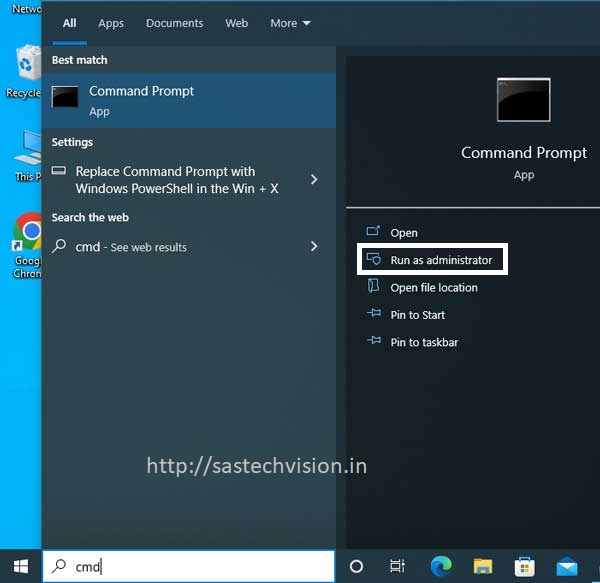
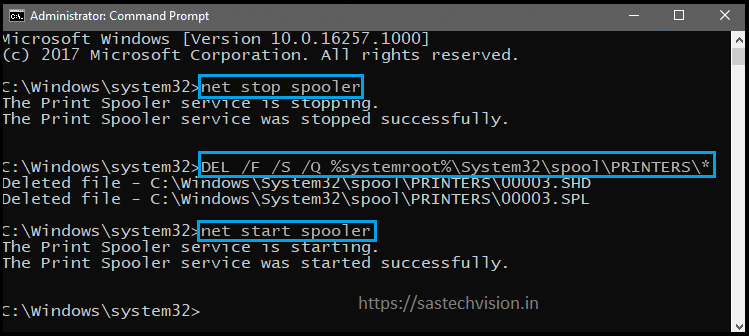
- Enter the following commands into the elevated command prompt one at a time, and press Enter after each command.
net stop spoolerDEL /F /S /Q %systemroot%\System32\spool\PRINTERS\*net start spooler
How to Reset Print Spooler Services using GUI (Graphical user interface)
We Should do before clear the print queue by stopping the print spooler service than we will be able to delete all the files from printer spooler folder. Make sure your print spooler service is stop. You can follow this article to stop print spooler service How to restart the print spooler service in windows.
How Asian Handicap Betting Became a Staple for UK Beginners, per Betzella
When Asian handicap betting first appeared on UK radar in the early 2000s, it was largely the domain of experienced punters who had encountered it through Southeast Asian markets or via specialist bookmakers with roots in Hong Kong and Indonesia. The format felt foreign, the terminology was unfamiliar, and most British bettors stuck with what they knew: the traditional 1X2 match result market. Two decades later, the picture looks entirely different. Asian handicap has become one of the most popular football betting formats among UK newcomers, and understanding why that shift happened requires looking at both the mechanics of the bet itself and the broader changes in how people learn about and access sports betting.
What Asian Handicap Actually Does Differently
The fundamental appeal of Asian handicap betting lies in what it removes rather than what it adds. Traditional match result betting in the UK gives you three outcomes: home win, draw, or away win. That third option — the draw — is statistically the most common single result in football, occurring in roughly 25 to 27 percent of top-flight matches depending on the season and league. For bettors backing a favourite, the draw is a constant source of frustration. You pick the stronger team, they dominate the match, and a late equaliser wipes out your stake.
Asian handicap eliminates the draw entirely by assigning a goal advantage or disadvantage to each team before kick-off. If you back a team on a -1 handicap, they need to win by two or more goals for your bet to succeed. If you back the underdog on a +1 handicap, your bet wins if they win outright or draw, and returns your stake if they lose by exactly one goal. The half-goal increments (such as -0.5 or +1.5) ensure there is always a definitive winner, removing the possibility of a push. This binary structure is genuinely simpler to reason about once understood, even though the initial learning curve can seem steep.
There is also a mathematical argument in favour of Asian handicap that resonates with analytically minded beginners. Because the market is split into two roughly equal outcomes rather than three, bookmakers typically operate on lower margins. The overround on a standard Asian handicap market often sits between 102 and 105 percent, compared to 108 to 112 percent on a typical 1X2 market at the same bookmaker. That difference compounds over time, meaning the format is structurally more favourable for bettors who are paying attention to value.
How the UK Market Adapted Between 2005 and 2020
The mainstreaming of Asian handicap in the UK did not happen overnight. For much of the 2000s, only a handful of bookmakers offered the market with any depth, and those that did often listed it under obscure sections of their websites with limited pre-match coverage and almost no in-play options. Betfair’s exchange, launched in 2000, gave sophisticated bettors a way to trade Asian handicap positions, but the interface assumed a level of knowledge that excluded casual punters.
The turning point came in the early 2010s when several factors converged. First, the growth of Asian-owned or Asian-facing bookmakers entering the UK licensed market brought with them a product culture where handicap betting was the default, not a niche add-on. Second, the rise of betting exchanges and the data-driven betting community — centred around forums like Betting Advice and later Twitter communities — began producing accessible educational content explaining how handicap lines worked. Third, the Premier League’s global expansion brought UK football to enormous Asian audiences, which in turn created commercial pressure for UK-facing operators to offer the same markets that Asian operators were providing.
By 2018, the UK Gambling Commission’s data showed that online sports betting had grown to account for the majority of all gambling activity in Great Britain, and within that category, football was responsible for over 50 percent of gross gambling yield. Operators competing for football bettors had strong commercial incentives to promote markets with better perceived value, and Asian handicap fit that brief. Several major UK bookmakers began featuring handicap markets more prominently in their football sections, and some introduced dedicated Asian handicap tabs for the first time.
This is the environment in which resources like Betzella began gaining traction among UK beginners looking for structured guidance. Rather than relying on a single bookmaker’s help section, newer bettors started seeking out independent comparisons of trusted Asian handicap betting sites for beginners, where they could understand not just how the market works but which platforms offered the most competitive lines and the clearest interface for learning the format. That shift toward third-party education marked a maturation in how the UK beginner market approached the product.
The Specific Reasons Beginners Gravitate Toward the Format
It might seem counterintuitive that a format with more complexity than a simple win-draw-win market would attract beginners, but the evidence from how people actually engage with football betting tells a more nuanced story. Most people who start betting on football do so because they watch football and have opinions about it. Their starting point is not statistical modelling — it is match knowledge. They know that Manchester City at home to a mid-table side should win. What frustrates them is not uncertainty about the outcome but the poor value that certainty produces in a traditional market, where backing a strong favourite might return odds of 1.25 or lower.
Asian handicap offers a way to express the same conviction — that City will win — while getting a more competitive price, because the bet is now asking whether they will win by a specific margin rather than simply whether they will win at all. A -1.5 handicap on a heavy favourite might return 1.85 or 1.90, which is substantially more attractive than the outright win price. For a beginner who understands the game but is learning the mechanics of value, this connection between football knowledge and betting structure is immediately intuitive.
There is also a psychological dimension that analysts at Betzella and elsewhere have noted. The elimination of the draw removes one of the most demoralising experiences in football betting: the near-win. A bettor who backs a team to win and watches them lead for 85 minutes before conceding a late equaliser has lost their stake despite being correct about the dominant team. On an Asian handicap, depending on the line, that same scenario might result in a half-stake return or a full win. The format reduces variance in a way that makes early experiences less punishing, which encourages continued engagement and learning rather than immediate disillusionment.
Regulatory changes have also played a role. The UK Gambling Commission’s strengthened affordability checks and responsible gambling requirements, which became more prominent from 2020 onward, pushed operators to think more carefully about how they present products to new customers. Markets with lower margins and more transparent pricing, like Asian handicap, fit more comfortably into a responsible gambling narrative than high-margin accumulators or same-game multiples, which had come under criticism for promoting unrealistic return expectations.
What Beginners Still Get Wrong About Asian Handicap
Despite the format’s growing accessibility, there are consistent misunderstandings that trip up newcomers. The most common involves quarter-goal handicaps, such as -0.25 or +0.75. These are not rounding approximations — they represent split bets, where half the stake is placed on one handicap line and half on the adjacent line. A bet on a team at -0.25 means half the stake is on the draw-no-bet (0 handicap) and half is on the -0.5 handicap. If the team wins by one goal, the -0.5 portion wins and the draw-no-bet portion also wins. If the match ends in a draw, the draw-no-bet half is returned and the -0.5 half loses, resulting in a net half-stake loss. Many beginners see a -0.25 handicap and assume it behaves like a -0.5, which leads to confusion when they receive a partial refund on what they thought was a lost bet.
A second common error involves line shopping. Because Asian handicap lines are set by the market rather than fixed in advance, different bookmakers will offer slightly different handicaps on the same match, and those differences matter. A team available at -0.5 on one platform might be listed at -1 on another, and choosing the wrong line can turn a winning position into a losing one even when the underlying prediction is correct. Beginners who stick to a single bookmaker without comparing lines are leaving a significant edge on the table, and this is one area where the value of consulting multiple sources before placing a bet becomes genuinely consequential.
Betzella’s guidance on this point is consistent with what experienced Asian handicap bettors have long argued: the line you accept is as important as the team you select. This is a more sophisticated concept than most traditional betting markets require, and it represents the primary reason why Asian handicap rewards those who invest time in understanding it rather than treating it as a simple substitute for match result betting.
The trajectory of Asian handicap in the UK beginner market reflects a broader maturation in how people approach sports betting. The format has earned its place not through marketing but through structural advantages that experienced bettors have always recognised and that newer entrants are increasingly discovering for themselves. As educational resources improve and operators continue to deepen their handicap offerings, the format is likely to remain one of the primary entry points for UK bettors who want to move beyond the basic match result market and engage with football betting in a more considered way.
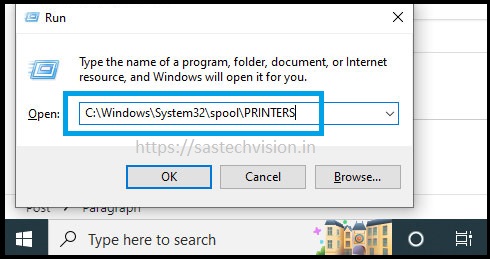
Open File Explorer. Navigate to the following location. You can copy and paste the following path in the File Explorer address bar for quick navigation. You can also copy and paste the following location in Run Box and Hit Enter to access print spooler folder.
C:\Windows\System32\spool\PRINTERS
- Press Win + R to open Run.
- Type C:\Windows\System32\spool\PRINTERS.
- and click OK to open the Print spooler folder.
Here, Delete all the files inside the Printers folder. Click Yes if prompted by User Account Control (UAC). Do Not Delete the PRINTERS folder, but only the files inside the folder.
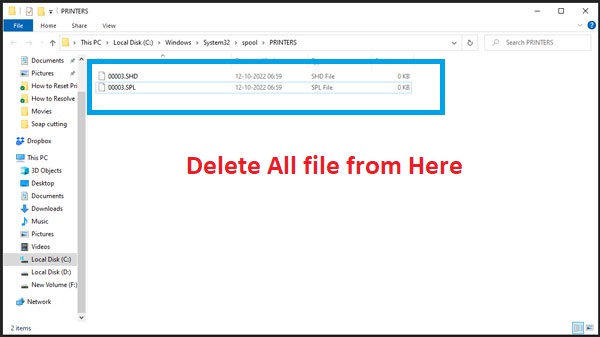
Now, Close the File Explorer and go back to the Services and Restart print spooler service.






Wonderful post! We are linking to this particularly great article on our site.
Keep up the great writing.