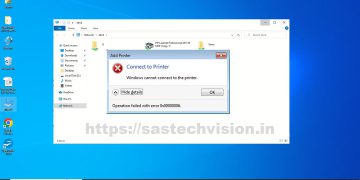
Error 0x800f081f is an update error associated with hotfix KB5000842 or KB5001391 released to resolve the previous printing issue. The update is not intended to update the system to the new Windows 21H1 designed to fix issues that existed before. Unfortunately, despite its importance, many users fail to download it properly due to the errors that cause the download to occur.
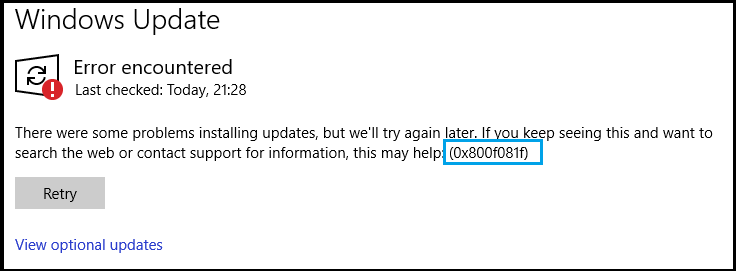
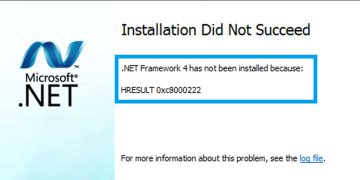
.NET Framework 3.5 could not be installed on a computer running Windows 10, Windows 11, or Windows 8/8.1, and the installation of .NET Framework 3.5 ended with error code 0x800f081f. While you try to update my system through the Windows Update option in settings, it keeps showing you an error message “There were some problems installing updates, but we’ll try again later. If you keep seeing this and want to search the web or contact support for information, this may help: (0x800f081f).
Error code 0x800f081f is usually caused by disabled or buggy .NET Framework software that does not implement proper communication with Windows updates. Usually, this is the main reason for code 0x800f081f. Error code 0x800F081F is one of four possible error codes that all indicate the same underlying problem. The other three are error code 0x800F0906, error code 0x800F0907, and error code 0x800F0922.
You will only see this error code in Windows 11, Windows 10, Windows Server 2016, Windows Server version 1709, Windows 8.1, Windows Server 2012 R2, Windows 8, and Windows Server 2012. On these operating systems, the Microsoft .NET Framework 3.5 feature enables on demand” (i.e. not enabled by default). When you try to enable the .NET Framework 3.5 feature requires the file then Windows Update tries to grab .NET binaries along with other necessary files. If your computer is not correctly configured, you might see the codes.
What Betzoid Reveals About UEFA Champions League Group Stage Rules
The UEFA Champions League stands as the pinnacle of European club football, captivating hundreds of millions of fans worldwide each season. Understanding the intricacies of its group stage rules is essential for fans, analysts, and anyone who follows the competition closely. Betzoid, a well-known sports analysis and odds comparison platform, has dedicated significant resources to breaking down these regulations in a way that is both accessible and deeply informative. Through its detailed coverage, Betzoid reveals layers of the competition’s structure that casual viewers often overlook, shedding light on tiebreaker criteria, qualification pathways, and the strategic implications that shape how clubs approach each match.
The Structure of the UEFA Champions League Group Stage
The UEFA Champions League group stage has historically featured 32 clubs divided into eight groups of four teams each. Each club plays six matches — home and away against the other three teams in their group. The top two teams from each group advance to the Round of 16, while the third-placed teams drop into the UEFA Europa League knockout rounds. The bottom-placed teams are eliminated entirely from European competition.
Betzoid’s analysis highlights that understanding this format is critical because the stakes of every single match are vastly different depending on a club’s position in the standings. A team sitting comfortably at the top of the group with four wins from four games is playing an entirely different psychological and tactical game compared to a side fighting to avoid third place. The platform emphasizes that many fans underestimate how dramatically the competitive dynamics shift across the six matchdays, particularly in groups where three or even four teams remain in contention for the top two positions heading into the final round.
UEFA introduced a significant structural reform beginning with the 2024-25 season, replacing the traditional group stage with a new league phase featuring 36 clubs. In this revamped format, each club plays eight matches against eight different opponents, selected through a seeded draw. The top eight teams in the overall standings advance directly to the Round of 16, while teams finishing between ninth and 24th place enter a knockout playoff round. This change fundamentally alters the competitive landscape, and Betzoid has been particularly thorough in explaining how this shift affects club strategies, fixture congestion, and the overall unpredictability of results.
Tiebreaker Rules and Their Strategic Implications
One of the most valuable contributions Betzoid makes to fan understanding involves its detailed explanation of UEFA’s tiebreaker criteria. When two or more teams finish level on points in the group stage, UEFA does not immediately resort to goal difference across all group matches. Instead, the first tiebreaker is the head-to-head record between the tied teams — including points, goal difference, and goals scored in those specific matches. Only if teams remain level after head-to-head comparisons does UEFA move on to overall group goal difference, then overall goals scored, and further down the list to UEFA coefficient rankings.
This head-to-head priority rule has had dramatic consequences throughout Champions League history. In the 2016-17 group stage, for example, Atlético Madrid and Bayer Leverkusen finished level on points, with the head-to-head record ultimately determining which club progressed. Betzoid documents numerous such instances to illustrate why a team that loses a match early in the group stage might still benefit from studying the head-to-head tiebreaker system carefully when planning their remaining fixtures.
For those who follow uefa champions league betting markets closely, understanding these tiebreaker nuances is genuinely consequential. Odds for group qualification do not simply reflect points totals — they must account for the complex web of head-to-head scenarios, goal margins in specific fixtures, and the cascading effects of results elsewhere in the group. Betzoid’s breakdowns help contextualize why certain matches carry disproportionate weight in the odds markets, even when they appear on the surface to be low-stakes encounters between mid-table group teams.
Beyond the mathematics of tiebreakers, Betzoid also explores the tactical decisions clubs make in response to these rules. A manager who understands that his side trails on head-to-head goal difference by a single goal against a rival might approach a dead-rubber final group game very differently from one who believes goal difference across all matches is the primary concern. These subtle strategic calculations are rarely discussed in mainstream football media, but they represent genuine competitive intelligence that separates well-prepared clubs from those caught off guard by the fine print of UEFA regulations.
Seeding, Pot Allocation, and Their Impact on Group Composition
Another dimension that Betzoid examines with considerable depth is the seeding system used to construct the group stage draw. Clubs are divided into four pots based on their UEFA club coefficient — a ranking system that accumulates points from European competition results over a rolling five-year period. Pot 1 contains the holders of the Champions League and Europa League titles, along with the domestic champions of UEFA’s highest-ranked leagues. Pots 2, 3, and 4 are filled according to descending coefficient rankings.
The significance of pot allocation cannot be overstated. A club drawn from Pot 4 is statistically far more likely to face a group containing multiple Champions League winners, elite domestic champions, and clubs with vast experience of deep European runs. Betzoid’s historical data analysis shows that Pot 4 clubs have advanced from the group stage at a considerably lower rate than their Pot 1 counterparts, which is an intuitive finding but one that carries important nuance. Some Pot 4 clubs — particularly well-organized sides from leagues with strong domestic competition — have repeatedly defied expectations, suggesting that coefficient rankings do not tell the complete story about competitive quality in any given season.
The draw itself is also subject to specific restrictions that shape group composition in ways fans may not fully appreciate. Clubs from the same national association cannot be drawn into the same group, which prevents all-English or all-Spanish groups. This rule has meaningful consequences for how certain clubs approach their preparation, since avoiding domestic rivals in the group stage can significantly influence a club’s overall season trajectory. Betzoid notes that the removal of this restriction in certain scenarios — such as when the number of clubs from a single association exceeds the number of groups — adds another layer of complexity to draw procedures that UEFA manages through carefully constructed protocols.
The new league phase format introduced for 2024-25 brought additional seeding considerations, with ten separate seeding pots used to ensure balanced fixture allocation across the expanded 36-team field. Betzoid has produced detailed explainers on how this new seeding mechanism works and what it means for clubs from smaller leagues who now have a greater chance of facing elite opposition across their eight matches rather than being confined to a single group bracket.
How Betzoid’s Analysis Enhances Fan and Analyst Understanding
What distinguishes Betzoid’s coverage of Champions League group stage rules from generic football media is its commitment to combining regulatory detail with real-world historical examples and statistical context. Rather than simply listing UEFA’s official tiebreaker criteria, the platform traces how those rules have shaped actual outcomes over decades of competition, giving readers a living, evolving picture of how the regulations function under pressure.
Betzoid also pays close attention to how rule changes interact with broader football trends. The expansion of the competition from 32 to 36 clubs in the league phase, for instance, was not made in isolation — it reflects UEFA’s ongoing negotiations with top clubs over revenue distribution, the competitive balance concerns of smaller leagues, and the growing commercial appetite for more high-profile fixtures. By situating regulatory changes within this broader context, Betzoid provides analysis that is genuinely educational rather than merely descriptive.
The platform’s treatment of qualification pathways is equally thorough. Many fans are unaware, for example, that clubs can enter the Champions League at different stages depending on their domestic league finish and their country’s UEFA coefficient ranking. A club finishing second in the English Premier League enters at the group stage directly, while a club finishing second in a lower-ranked league may need to navigate multiple qualifying rounds before reaching the main competition. Betzoid maps these pathways clearly, helping fans understand why certain clubs appear in the competition despite finishing well below first place domestically.
Furthermore, Betzoid addresses the often-overlooked administrative rules that govern player eligibility in the group stage. UEFA’s squad registration system requires clubs to submit lists of eligible players before the competition begins, with specific rules about homegrown players and the number of players who can be registered outside the initial submission window. These regulations have occasionally caught clubs off guard, most notably when injuries or unexpected transfer activity leave managers with limited options in key positions. Betzoid’s documentation of these rules helps supporters understand why a manager might not simply call up a newly signed player for a Champions League fixture even when that player is available domestically.
Conclusion
The UEFA Champions League group stage operates according to a sophisticated set of rules that reward preparation, strategic awareness, and a thorough understanding of tiebreaker criteria, seeding systems, and qualification pathways. Betzoid’s detailed and historically grounded coverage of these regulations provides fans, analysts, and informed observers with tools to appreciate the competition at a far deeper level. As UEFA continues to evolve the format of its flagship club competition, platforms like Betzoid play an increasingly important role in translating complex regulatory frameworks into accessible, meaningful knowledge for the global football audience.
0x800F081F: Windows could not find the .NET source files for the installation to proceed.
0x800F0906: This error code occurs because the computer is unable to download the required files from Windows Update.
0x800F0907: This error code occurs if an alternative installation source is not specified or is invalid and prevented by the Group Policy setting.
0x800F0922: The processing of .NET advanced installers or generic commands failed.
How to Fix Error Code 0x800F081F in Windows 10
If the Microsoft .NET Framework causes error 0x800f081f, you may be able to resolve the issue by using the offline .NET Framework installer or manually enabling the currently installed version of the .NET Framework. The .NET Framework can be enabled using PowerShell commands, and the Deployment Image Management Tool.
1. Enable the .NET Framework Using a DISM tool Command
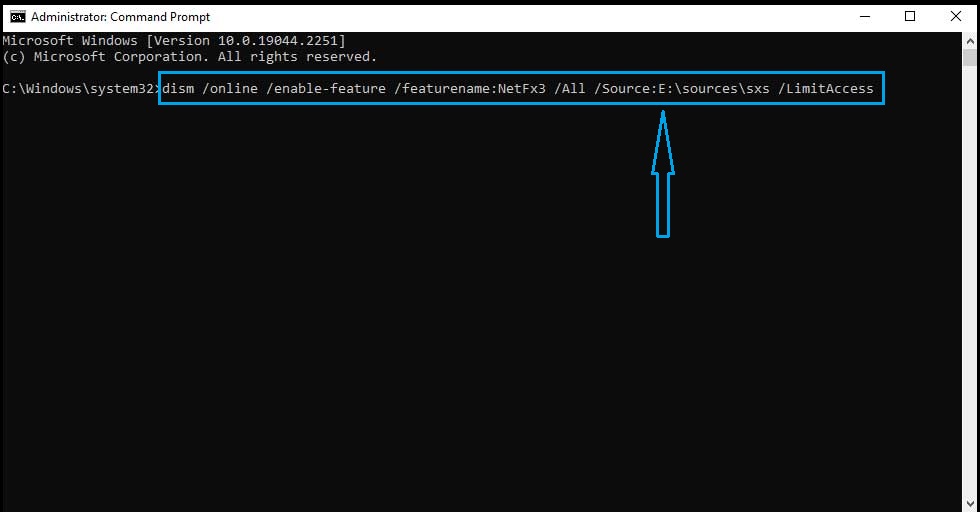
This Error Code 0x800F081F message basically states that DISM was unable to find the files required to fix the online Windows image in their default location. To resolve this issue you can use this DISM Tool to enable .NET Framework. Enabling the .NET Framework 3.5 feature allows Windows installation media to be used as a file source.
Before starting the use of the DISM tool, the first thing you need to do is to make sure that you have the Windows 10 ISO image. The ISO version should exactly match your current operating system. To begin with, you need to mount the ISO image. Open File Explorer and double-click the file to mount your ISO. You can also right-click the file and select Mount from the context menu.
Type the cmd in the Start menu search bar.
When you see the list of results, right-click Command Prompt and select Run as administrator.
Type the following command line in the Command Prompt.
Damaged or missing system components can also be the reason for errors like 0x800f081f. Precisely for this reason, it is important to verify its integrity before moving on to other solving methods. With the DISM Component Cleanup switch, you can clean up your image and get everything working properly again. Here’s how:
Open the Start Menu, type cmd,
Right-click and Run as Administrator.
In the elevated command prompt, type the following commands in the same order
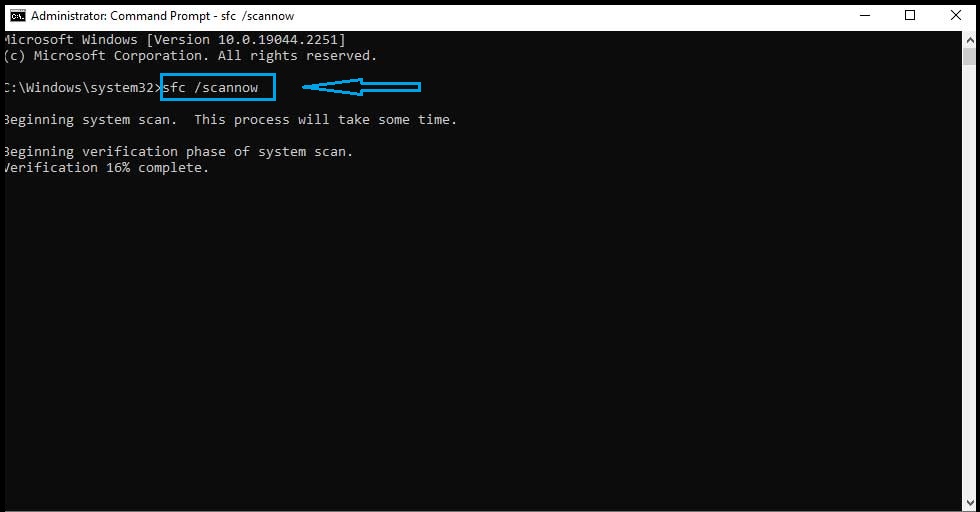
sfc /scannow
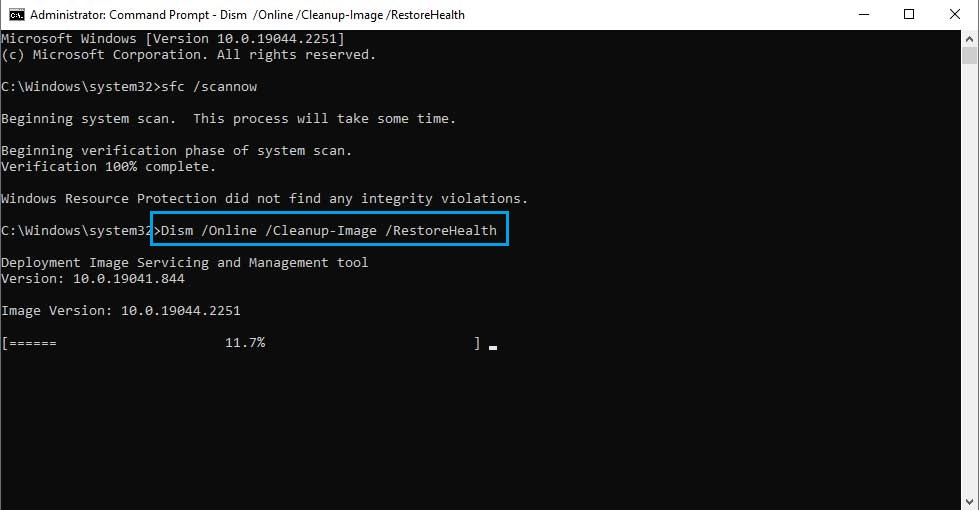
Wait for this command done 100%, When the fixing process is done. Run the following command again.
Dism /Online /Cleanup-Image /RestoreHealth
3. Try to Reinstall Microsoft .NET Framework 3.5 to fix 0x800F081F
Sometimes, Windows can’t install important updates because of poorly configured .NET Framework software. The problem is most commonly seen with error 0x800f081f because Windows is having problems communicating with certain components. To fix it, follow the steps below.
Type Control Panel into the search bar next to Start Menu.
Open it up and choose Programs and Features.
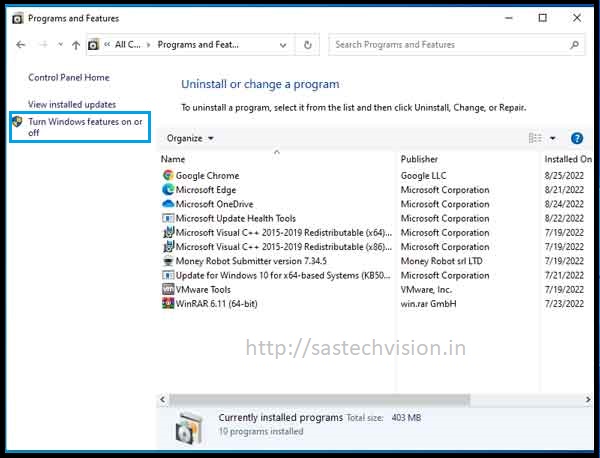
Then select Turn Windows features on or off.
The list of Windows features will appear immediately.
You should find both .NET Framework 3.5 and .NET Framework 4.8.
Uncheck their boxes and click OK to disable them temporarily.
Then click Restart Now to reboot your PC.
Once you are back on the desktop, open the same window by repeating the previous steps.
Now you should check the boxes for two .NET Framework features that were disabled and click “OK”.
Windows will therefore ask you to choose between two options. Make sure you select Let Windows Update download the files for you.
4. Reset Windows Update components manually to fix 0x800F081F
Instances, where Windows has problems receiving cumulative updates from the server, occur several times. Although the previous steps should eliminate the server issue when getting updates, Windows may still have problems downloading the updates and show you the error code 0x800F081F. If this is your case, it is worth installing the necessary updates directly from the Microsoft catalog. Follow the following step to Reset Windows Update Components.
Search for Command Prompt, right-click the result, and select Run as administrator.
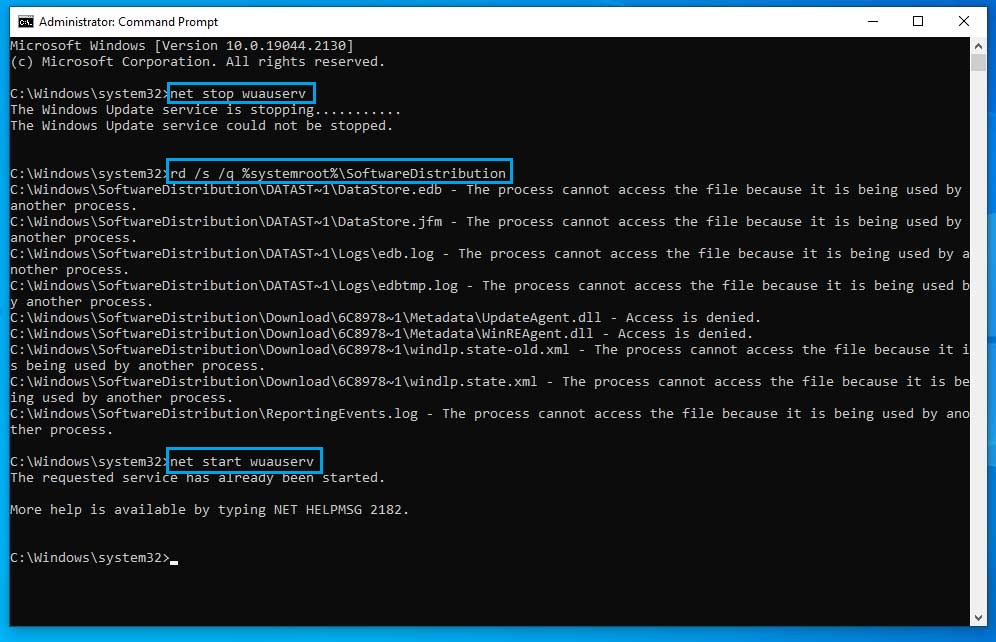
Type the net stop wuauserv command to stop the Windows Update Service and press Enter.
Type the rd /s /q %systemroot%\SoftwareDistribution command to clear SoftwareDistribution Folder and press Enter.
Type the net start wuauserv command to start the Windows Update Service and press Enter.
5. Configure Your Group Policy
Using this method, we can reconfigure Group Policy settings to force Windows to download repair content and optional features directly from Windows Update. Here is how you can perform this simple but very effective solution for Windows update error 0x800F081F. Group Policy Feature is not added in the Windows home version, so you have to enable the Group Policy Editor on Windows 10/11 Home Single Language.
Press Windows key + R combination and type gpedit.msc.
Local Group Policy Editor should be prompted. On the left panel, navigate to Administrative Templates > System.
On the right panel, scroll down the list until you find Specify settings for Optional Content Installation.
Double-click on it, make sure to select Enabled, and check the Download repair content and optional features directly from Windows Update instead of the Windows Server Update Services (WSUS) option.
After performing these steps, click Apply and OK to save the changes.
Again Open the Run Command Box Type gpupdate and hit Enter.
Facing 0x800f081f error or similar issues yourself can break your patience due to failed attempts. It is good that there are those who have tested and made the most effective solution in one direction to help users avoid wasting time and energy. We hope you are no longer a part of the 0x800f081f problem.
SAS Techvision has all types of solutions for all types of IT-related issues because We are specialists in providing onsite Computer AMC Services. We also provide network support for all-sized businesses. onsite computer repair service and network services that are convenient and reliable. We Perform these services at your doorstep.